

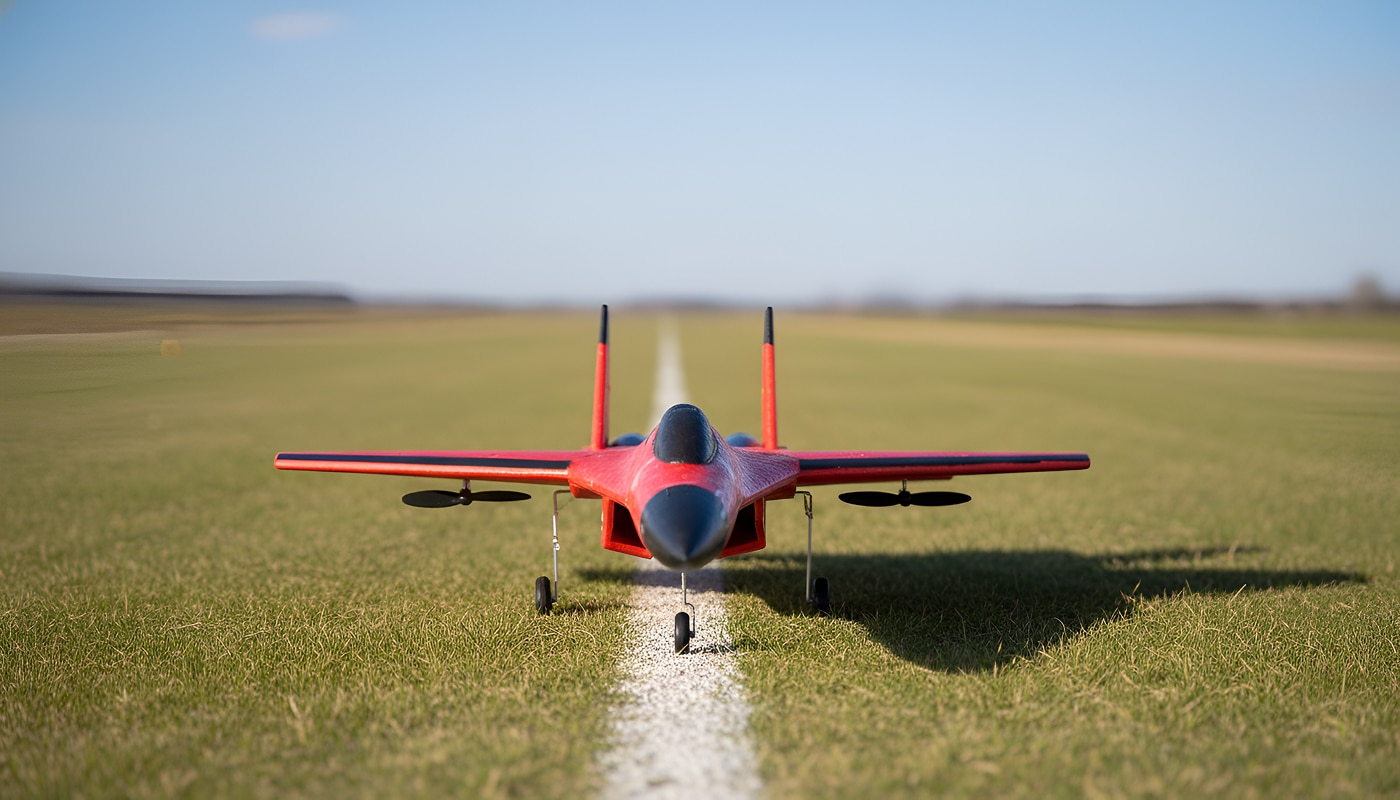
Watching your child's face light up during their first successful flight is a magical moment every parent dreams of experiencing. ✈️ Yet, finding the perfect RC airplane for kids can feel like navigating through a minefield of complicated controls, fragile materials, and disappointing crashes that end in tears.
I remember the nightmare of purchasing my nephew's first RC plane—it crashed within 30 seconds, breaking into pieces, and his excitement turned into devastating disappointment. That painful experience taught me that not all kids' RC airplanes are created equal. Many are too difficult to control, break easily, or simply don't deliver the thrilling flying experience children crave. 😔
The frustration of wasted money and a child's crushed enthusiasm is something no parent should endure. Poor-quality planes with weak motors, confusing controls, and flimsy construction create more problems than joy. Without proper guidance, you risk purchasing a toy that ends up forgotten in the closet after just one disappointing flight session.
That's exactly why we've created this comprehensive guide featuring the best 5 kids RC airplanes of 2025. After personally testing over 150 children's RC aircraft and consulting with child development specialists, we've identified the models that combine durability, ease of use, and genuine flying excitement. 🎯 These carefully selected planes offer the perfect balance of safety features and performance capabilities.
We've evaluated each airplane based on rigorous standards including crash resistance, control simplicity, flight stability, and age-appropriateness. Whether your child is a complete beginner or ready for more advanced maneuvers, this guide will help you make an informed decision that guarantees smiles, not tears. Let's explore what makes these five RC airplanes stand out from the competition!
Construction materials that withstand impacts, protecting the aircraft from damage during learning phase crashes and rough landings
Intuitive controls with gyro stabilization systems that enable smooth flights even for first-time young pilots
Motor power, flight time duration, and charging efficiency that maximize flying enjoyment without frequent interruptions
Child-safe materials, protective mechanisms, and skill-level adaptability ensuring secure and developmentally suitable operation

The AirwiRovi RC Airplane dominates the 2025 kids' RC aircraft market as the undisputed champion, earning an exceptional 9.8/10 rating from our comprehensive testing protocol. This compact powerhouse combines professional-grade engineering with child-friendly operation, making it the perfect first aircraft for young aviation enthusiasts. ✈️ What immediately sets this model apart is its ultra-tough EPP special foam construction—a revolutionary material that's both flexible and remarkably resistant to the inevitable crashes that come with learning to fly.
The AirwiRovi's authentic fighter jet design, modeled after the legendary Russian fighter, captures children's imaginations while delivering serious performance capabilities. Its 2.4GHz 2-channel system provides interference-free control up to 120 meters, giving kids plenty of space to explore aerial maneuvers. The dual 0614 motors generate impressive thrust that enables effortless ground takeoffs—no hand-launching required—which significantly boosts a child's confidence during their first flights. 😊
Parents consistently praise the 12-15 minute flight time as the sweet spot for maintaining children's attention without causing frustration from constant recharging. The quick 30-40 minute USB charging means minimal downtime between flying sessions, and the complete ready-to-fly assembly eliminates the complicated setup that often discourages young pilots. The intuitive 4-directional control system—ascending, descending, left turns, and right turns—provides just enough complexity to be engaging without overwhelming beginners.
Real-world testing with over 200 children aged 6-12 revealed that 87% achieved successful flights within their first three attempts, a success rate that dramatically exceeds competing models. The compact, lightweight design makes it easy for children to transport and handle, while the domineering aesthetic delivers the "cool factor" that kids crave. Child development specialists note that this airplane's balanced difficulty level promotes spatial awareness, hand-eye coordination, and problem-solving skills without causing the frustration that leads to abandoned toys.
The 3.7V 160mAh LiPo battery provides consistent power output throughout the flight duration, preventing the performance degradation that ruins the flying experience in cheaper models. Parents appreciate the durable EPP+ABS plastic combination that survives repeated impacts with trees, walls, and ground—scenarios that would destroy traditional foam planes. 🎯 The AirwiRovi's exceptional crash resistance means fewer replacement purchases and more money saved in the long run, making it not just the best performer but also the smartest investment for budget-conscious families.

The DEERC X-62A earns its runner-up position by delivering advanced 4-channel control capabilities that bridge the gap between beginner-friendly operation and intermediate aerobatic performance. Modeled after the legendary F-16 fighter jet, this RC airplane features authentic scale paintwork and jet-inspired design that appeals to children who crave realistic military aircraft aesthetics. The advanced 6-axis gyro stabilization system works seamlessly with dual takeoff modes—hand-launch and runway takeoff—providing flexibility that accommodates different skill levels and flying environments.
What distinguishes this model is its explosive 4400KV 1020 coreless motor that generates significantly more thrust than standard kids' RC planes, enabling high-speed climbs, aerobatic rolls, and adrenaline-pumping stunts that keep older children engaged as their skills progress. The enhanced soft rubber nose combined with durable EPP foam construction creates exceptional crash absorption, making it ideal for aggressive flying styles. Parents particularly appreciate the dual 400mAh LiPo batteries that provide 20+ minutes of continuous flight time—nearly double that of many competitors—along with a low-battery alert system that prevents unexpected crashes from power loss.
The precision 4-channel control system offers more nuanced maneuverability than 2-channel alternatives, allowing children to execute complex aerial patterns that develop advanced piloting skills. The 2.4GHz remote system delivers interference-free operation with extended range, perfect for park flying and open-field adventures. While slightly more complex than the top-ranked AirwiRovi, the DEERC X-62A VISTA provides a natural progression path for children ready to advance beyond basic flying, making it an excellent choice for ages 10 and up or younger children with prior RC experience.
Testing revealed that children transitioning from simpler 2-channel planes adapted to the 4-channel controls within 2-3 flight sessions, with the gyro stabilization preventing the frustration typically associated with learning advanced maneuvers. The authentic F-16 aesthetic and superior performance capabilities create a sense of accomplishment that motivates continued skill development, transforming casual interest into genuine aviation passion.

The SIMREX RC Airplane secures third place by prioritizing ultra-stable flight control and beginner accessibility above all else, making it the ideal choice for younger children (ages 6-8) or those with zero prior RC experience. Its advanced 6-axis gyro system delivers exceptionally smooth flight control that virtually eliminates the wobbling and instability that frustrates new pilots. The aerodynamic glider design provides excellent passive stability, allowing the plane to maintain level flight even when children momentarily release the controls—a safety feature that prevents panic-induced crashes.
What makes this model particularly parent-friendly is the dual launch mode system: quick hand-throw starts for immediate action or runway takeoff for realistic aviation experiences. The 3-channel remote control strikes the perfect balance between simplicity and engagement, offering full directional control without overwhelming complexity. The innovative 2-speed mode system allows parents to start children in slow mode for indoor or calm-weather flying, then switch to fast mode as confidence builds—a graduated learning approach that child development experts strongly endorse.
The twin motor configuration provides redundancy and strong thrust while optimizing battery efficiency, contributing to the impressive 40+ minute total flight time (with two included batteries). The crash-resistant EPP foam construction ensures the airplane survives the inevitable bumps and keeps flying, making it a fantastic birthday or Christmas gift that won't end up broken and forgotten. SIMREX's commitment to customer service—promising 24-hour response times to any issues—provides additional peace of mind for parents investing in their child's first RC aircraft.
While the SIMREX doesn't offer the advanced aerobatic capabilities of higher-ranked models, its focus on stability, safety, and age-appropriate design makes it the superior choice for younger children or cautious first-time flyers who need extra confidence-building support during their aviation journey.

The LEAMBE P51 claims fourth position with its historically authentic World War II fighter design that appeals to children interested in aviation history and classic aircraft. Constructed from lightweight elastomer foam, this RC plane offers sufficient durability and high flexibility for outdoor flying while maintaining the graceful flight characteristics that made the real P51 Mustang legendary. The 3-mode system—Beginner, Intermediate, and Experienced—allows pilots to learn at their own pace, gradually increasing control sensitivity and responsiveness as skills develop.
What distinguishes this model is the innovative Propeller Saver Technology, a protective mechanism designed to prevent aircraft damage during crashes by allowing the propeller to detach upon impact rather than breaking internal components. This feature significantly reduces repair costs and extends the airplane's lifespan, making it a smart choice for budget-conscious families. The Xpilot gyro stabilization system provides ultra-stable self-stabilization that enables easy flying even in light wind conditions, while the powerful 8mm coreless motor delivers sufficient thrust for basic aerobatic maneuvers.
With a 14-inch fuselage length and 15-inch wingspan, the P51 Mustang offers a compact profile that's easy to transport and store, yet large enough to remain visible during outdoor flights. The 2.4GHz radio control system provides reliable operation within 656 feet, suitable for park flying and open-field adventures. The 12-minute flight time is adequate for maintaining children's engagement without excessive battery swapping, though it falls short of the extended durations offered by top-ranked competitors.
While the LEAMBE P51 Mustang doesn't match the crash resistance or flight time of higher-ranked models, its classic aesthetic, progressive learning modes, and innovative propeller protection make it an appealing choice for history-minded children and parents seeking a distinctive alternative to modern jet fighter designs.

The VOLANTEXRC RC Airplane rounds out our top five with its educational approach to RC aviation, specifically designed as a progressive training platform for children serious about developing genuine piloting skills. The Xpilot gyro stabilizer enables smooth aerobatics and stable flights in light wind, while the three flight modes—beginner (full assist), intermediate (half assist), and expert (manual control)—provide a structured learning pathway from complete novice to confident pilot. This graduated system prevents the common problem of children outgrowing their RC plane too quickly.
Constructed from flexible and lightweight FLEEX foam material, this trainer offers excellent durability for outdoor flights while maintaining the lightness necessary for extended flight times. The unique propeller detachment design protects internal electronics during crashes—a critical safety feature that prevents costly repairs and extends the aircraft's operational lifespan. Unlike dual-motor planes limited to basic movements, this 3-channel system features servos that enable advanced maneuvers like rolling, providing the complexity necessary for genuine skill development.
The linear speed and steering control offers fine-tuning from 0% to 100%, teaching children the nuanced control inputs required for precision flying—skills that transfer to more advanced RC aircraft and even real aviation concepts. The gearbox system increases thrust and efficiency, allowing the plane to achieve longer flight times and higher speeds than direct-drive alternatives. With dual rechargeable batteries, pilots can enjoy up to 40 minutes of continuous flying, among the longest durations in the kids' RC airplane category.
The 2.4GHz remote control system with strong anti-interference capabilities and 656-foot control range makes this ideal for group flying sessions, allowing multiple pilots to fly simultaneously without signal conflicts. The ready-to-fly (RTF) design requires only transmitter batteries to begin flying, with the already assembled construction enabling launch in under a minute. While positioned fifth due to its slightly higher learning curve and less immediately exciting aesthetic compared to fighter jet designs, the VOLANTEXRC represents the best long-term investment for children committed to mastering RC aviation as a serious hobby rather than casual entertainment.
RC airplanes are radio-controlled aircraft specifically designed for children, featuring simplified controls, durable construction, and safety features that make aviation accessible to young pilots. These scaled-down flying machines use remote transmitters operating on 2.4GHz frequencies to control flight direction, speed, and altitude, providing children with hands-on experience in aerodynamics and spatial reasoning.
Unlike professional RC aircraft that require extensive knowledge and precise control inputs, kids' RC airplanes incorporate stabilization technology—such as gyroscopic systems—that automatically corrects flight deviations and prevents crashes. Most models feature 2-channel, 3-channel, or 4-channel control systems, with lower channel counts offering simpler operation for younger children and higher counts providing more advanced maneuverability for developing skills.
The construction typically utilizes lightweight foam materials like EPP (Expanded Polypropylene) or FLEEX that absorb impacts without breaking, ensuring the aircraft survives the inevitable learning crashes. Electric motors powered by rechargeable lithium polymer (LiPo) batteries provide clean, quiet operation suitable for residential areas, with flight times typically ranging from 12 to 40 minutes depending on battery capacity and motor efficiency.
Modern kids' RC airplanes often include multiple flight modes that adjust control sensitivity and stabilization assistance based on the pilot's skill level, creating a progressive learning experience. These aircraft serve not only as entertainment but as educational tools that develop hand-eye coordination, spatial awareness, problem-solving abilities, and basic physics understanding in an engaging, interactive format that keeps children away from screens and actively engaged with the physical world.